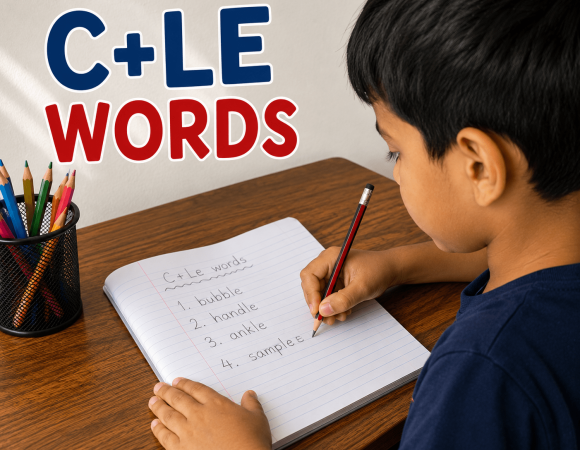
Consonant + le Words

(Disclaimer: This post contains affiliate links. If you make a purchase through these links, I may earn a small commission at no extra cost to you. As an Amazon Associate, I earn from qualifying purchases.
)

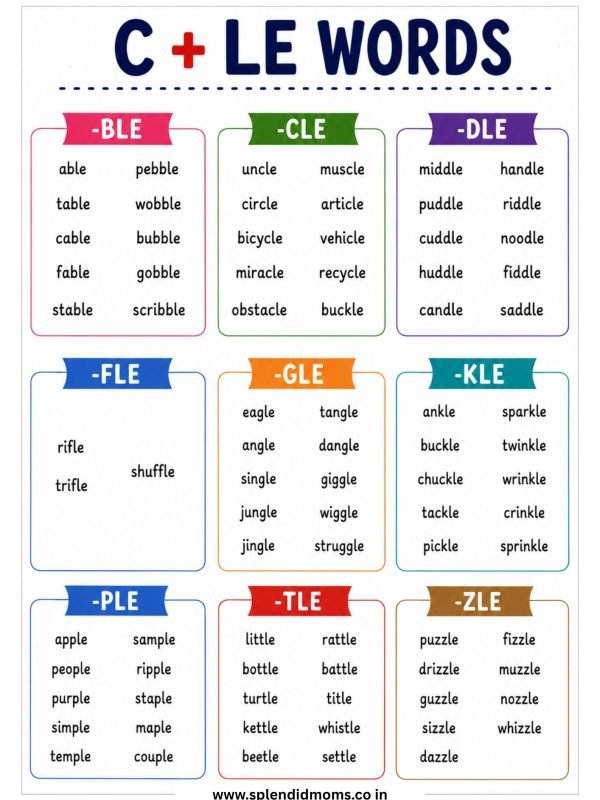
Have you ever noticed that many longer words end with -ble, -dle, -fle, -gle, -kle, -ple, -tle, or -zle?

Words like table, candle, bubble, and apple all follow a special spelling pattern called the Consonant + LE (C+LE) syllable.

Once children have mastered CVC words, blends, digraphs, and silent e, they’re ready to tackle longer two-syllable words. Learning the C+LE pattern helps them break unfamiliar words into smaller, readable chunks, making reading and spelling much easier.

c+le words final syllable

What Is a Consonant + LE Syllable?

A Consonant + LE syllable appears at the end of a word. It contains:

  • One consonant
  • The letters le

Children can divide these words by counting back one consonant before the -le ending.

For example:

  • ta | ble
  • ap | ple
  • bub | ble
  • can | dle
  • lit | tle

This simple strategy makes longer words much less intimidating.

Common Consonant + LE Word Lists

PatternWords
-blebubble, table, cable, pebble, wobble, crumble, scribble, tumble, marble, trouble
-dlecandle, bundle, handle, paddle, middle, riddle, saddle, puddle, noodle, cradle
-flewaffle, raffle, sniffle, trifle, ruffle, scuffle, shuffle, muffle, baffle, scoffle*
-gleeagle, jungle, giggle, wiggle, struggle, tangle, jingle, angle, bugle, single
-kleankle, buckle, sparkle, crackle, pickle, tickle, wrinkle, tackle, sickle, knuckle
-pleapple, purple, simple, sample, people, temple, ripple, maple, couple, staple
-tlelittle, bottle, turtle, kettle, beetle, title, settle, gentle, whistle, brittle
-zlepuzzle, drizzle, sizzle, fizzle, muzzle, nozzle, guzzle, bedazzle, embezzle, frazzle
4

Why Practice C+LE Words?

Learning Consonant + LE words helps children:

  • Read longer words more fluently.
  • Improve syllable division skills.
  • Strengthen spelling patterns.
  • Build confidence with multisyllable words.
  • Expand their vocabulary.

These skills are especially important as children move from learning to read to reading independently.

Perfect for Kindergarten, Grade 1 & Grade 2

These worksheets are ideal for:

  • Grade 1 phonics lessons
  • Grade 2 spelling practice
  • Homeschool learning
  • Literacy centers
  • Reading intervention
  • Independent practice
Just 10–15 minutes of regular practice can help children recognize these patterns automatically.